|
Powering Ethiopia's Green Future: Shaping a Just Energy Transition Narrative |
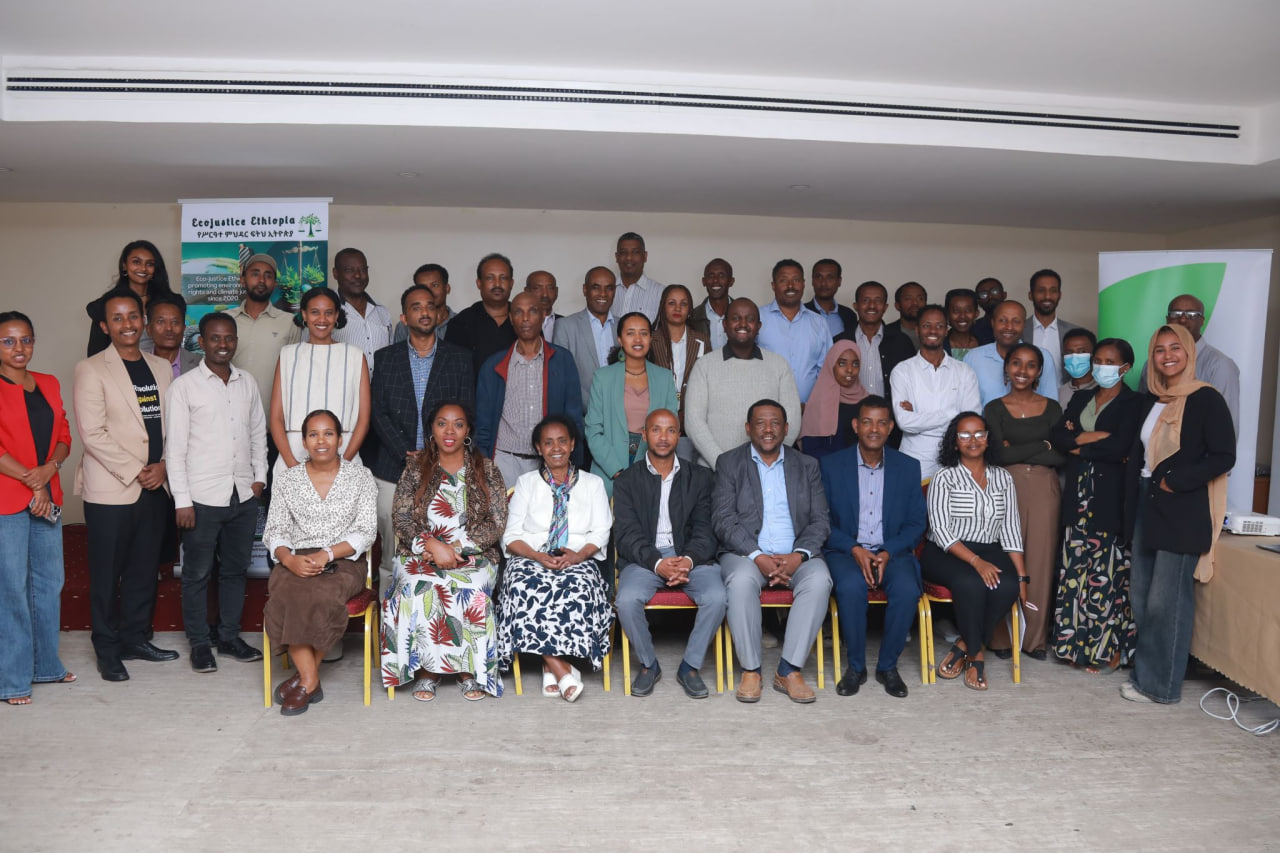
Today Eco-Justice Ethiopia, in partnership with the Consortium for Climate Change Ethiopia (CCC-E) for Climate Change Ethiopia, successfully hosted a national civil society consultation workshop in Addis Ababa under the theme, "Powering Ethiopia's Green Future: Shaping a Just Energy Transition Narrative."
Ethiopia faces severe macroeconomic pressure, spending nearly $5 billion annually on fossil fuel imports.
The workshop featured presentations from leading sector experts and scholars. Ato Tagay Hamza Mehamed presented the current state of Ethiopia’s energy sector, noting that while the country generates 95% of its electricity from renewable sources, the transport sector's heavy reliance on fossil fuels causes a severe drain on foreign exchange. To mitigate this economic pressure, he detailed the government's ongoing efforts and future policy directions to ensure practical energy sovereignty through the expansion of electric mobility (E-mobility), diversifying the energy mix, and deploying off-grid solar alternatives.
Following this, veteran climate policy and negotiation scholar Dr. Mulugeta Mengist Ayalew elaborated on the conceptual evolution, historical background, and policy frameworks of a 'Just Transition'. He strongly argued that the Just Transition narrative must be centrally anchored in Africa’s, and particularly Ethiopia’s, undeniable "Right to Development."
Ms. Seble Samuel then provided a comprehensive overview of the Fossil Fuel Treaty Initiative. She outlined how fossil fuels are the primary driver of climate-induced loss and damage in developing nations. She emphasized that for fossil fuel-importing nations like Ethiopia, fuel procurement depletes foreign currency reserves and exacerbates debt burdens, creating a severe macroeconomic crisis. To break this dependency, she explained the Treaty’s three core pillars: halting new fossil fuel extraction, phasing out fossil fuels fairly, and ensuring a Just Transition supported by non-debt-creating finance. She also highlighted the strategic objectives of the upcoming Santa Marta international conference in Colombia.
These expert presentations were followed by a highly active and interactive discussion session, where civil society representatives, scholars, and youth raised pertinent questions and forwarded strong comments regarding a just energy transition. Participants discussed the need for heightened commitment from both the government and the public to leverage Ethiopia's renewable energy potential and shift from costly fossil fuel dependency toward clean domestic energy and e-mobility. Furthermore, participants emphatically demanded that the financial support provided by the international community for this transition must be in the form of fair grants and reparations, rather than loans that worsen Ethiopia’s debt burden.
|
|
GAIA- Global Action Hub on Waste Methane and Environmental Justice |
 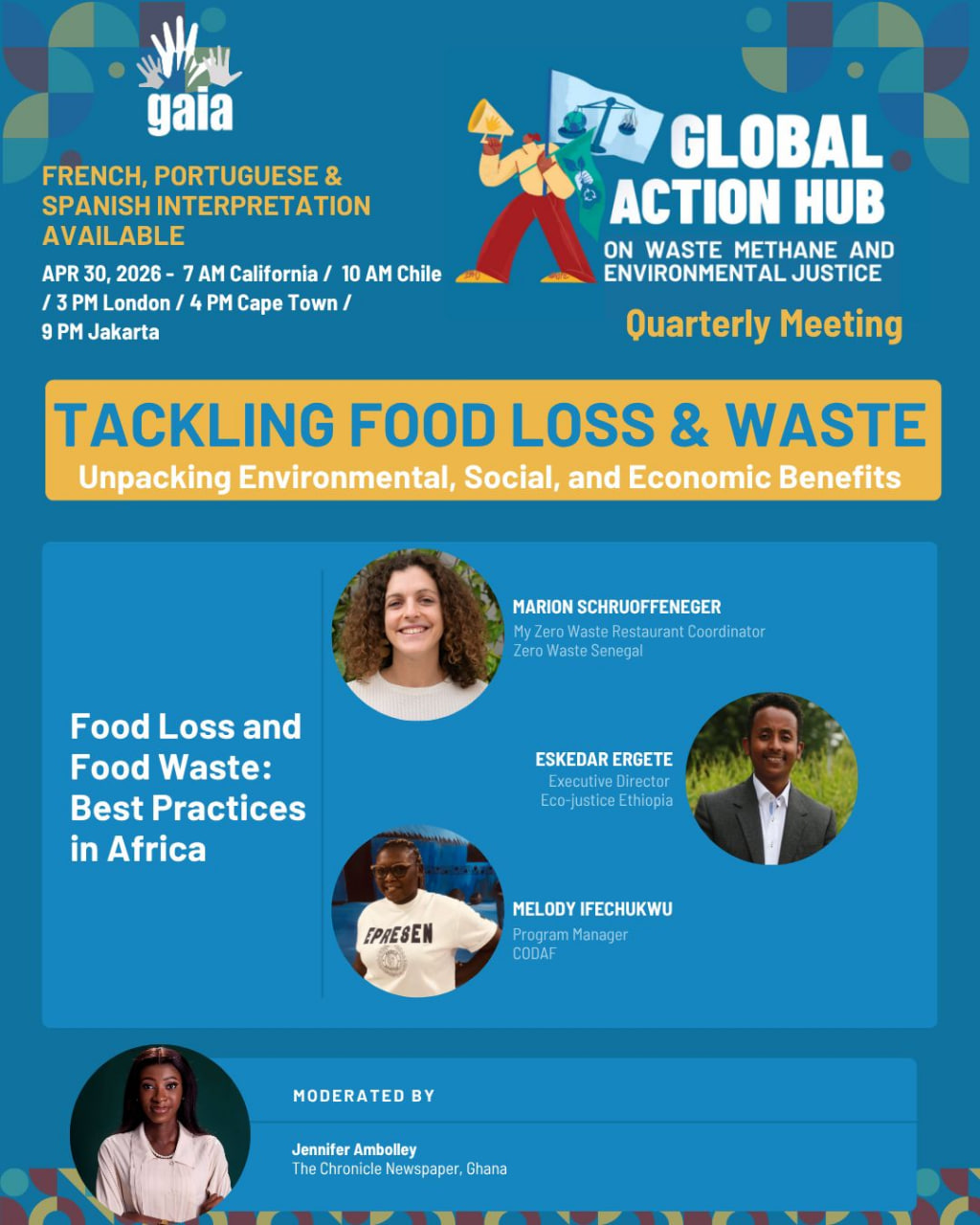 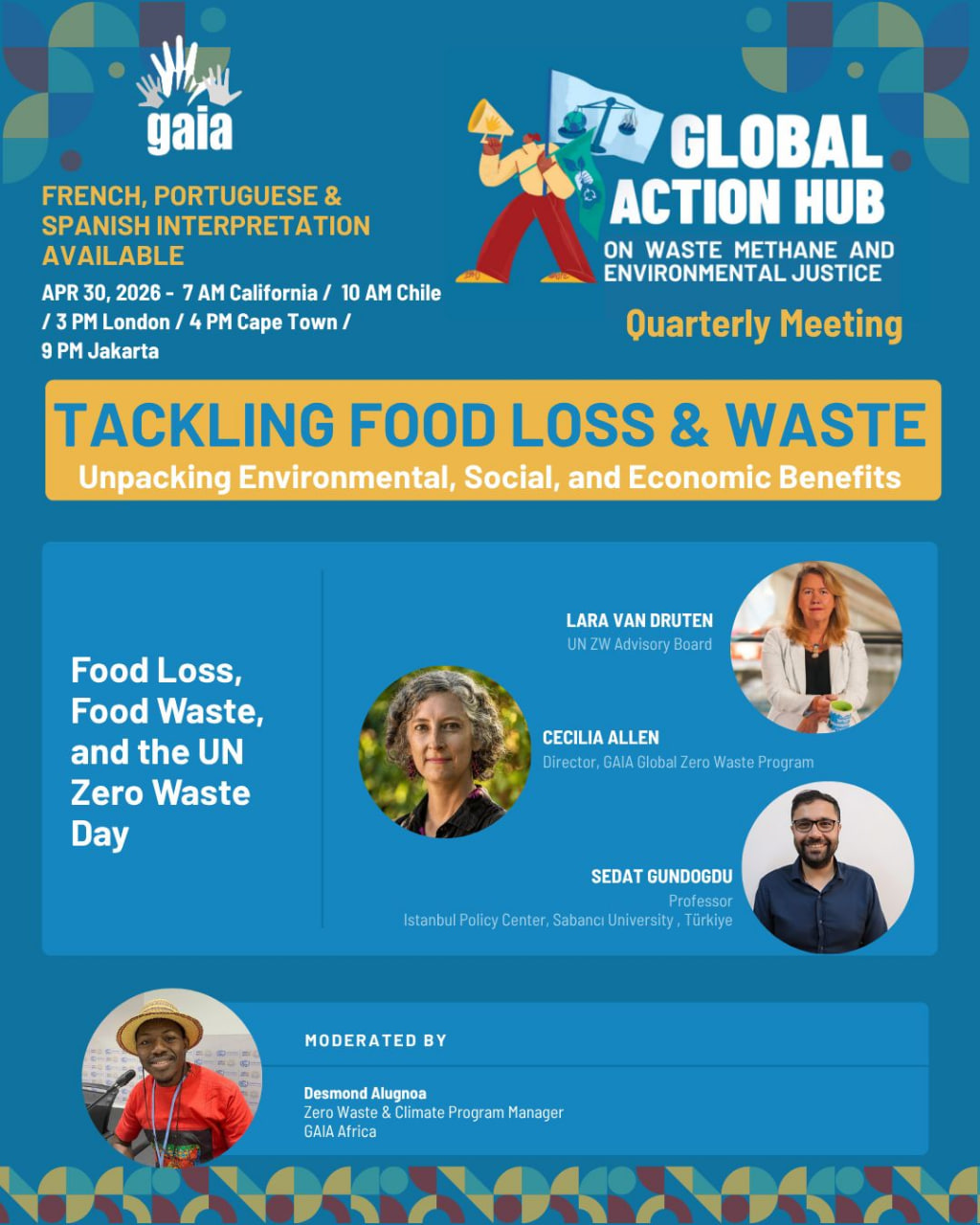
Meet the inspiring speakers joining us for the Global Action Hub Quarterly Meeting, co-organized with GAIA Africa.
Be part of a powerful conversation on waste methane and environmental justice with changemakers from around the world.
🗓 April 30, 2026
🕒 Multiple time zones for global participation
🌐 Interpretation available in Portuguese, French, and Spanish
Don’t miss it! Join us as we exchange insights and explore ways to drive meaningful action toward a more just and sustainable future.
👉 Register now and secure your spot via link on our story
|
|
The Santa Marta Post-Conference Brief |
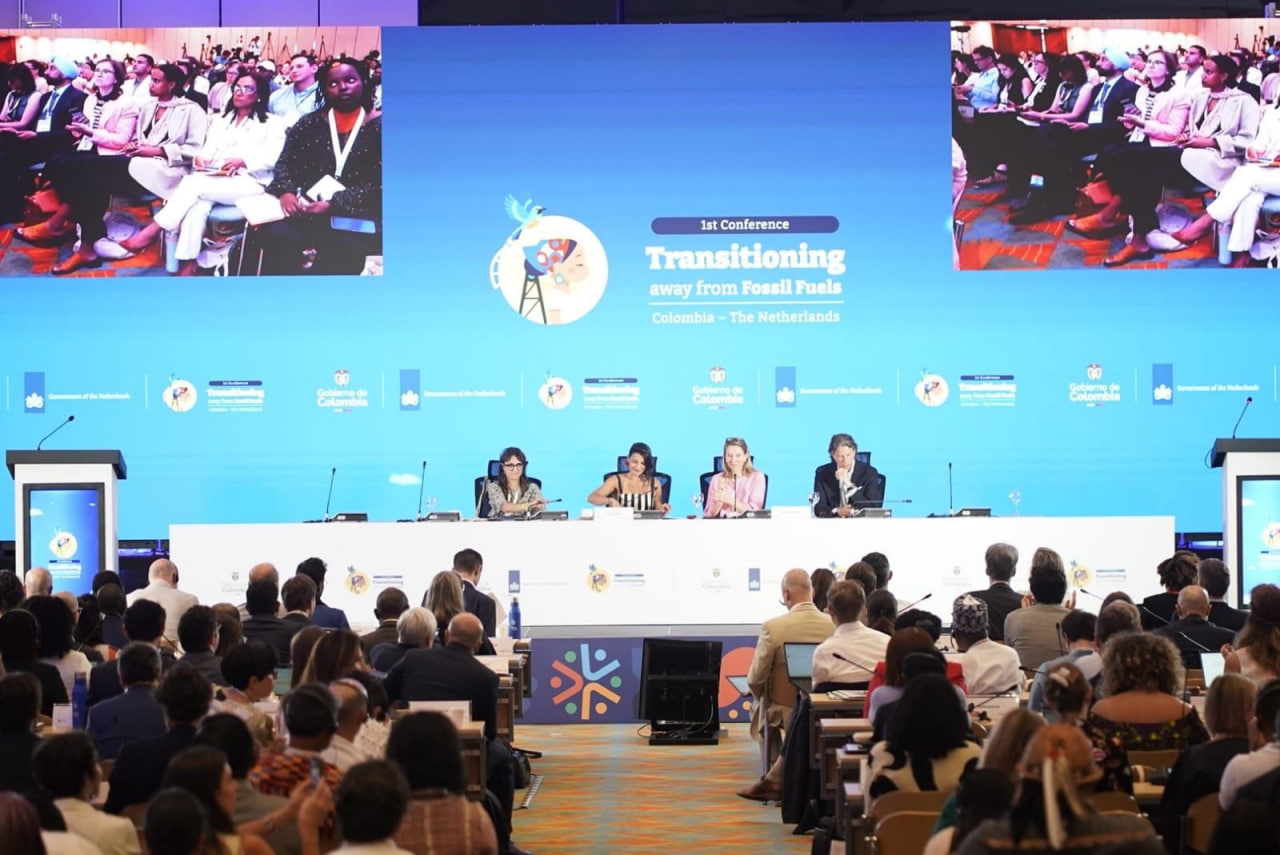 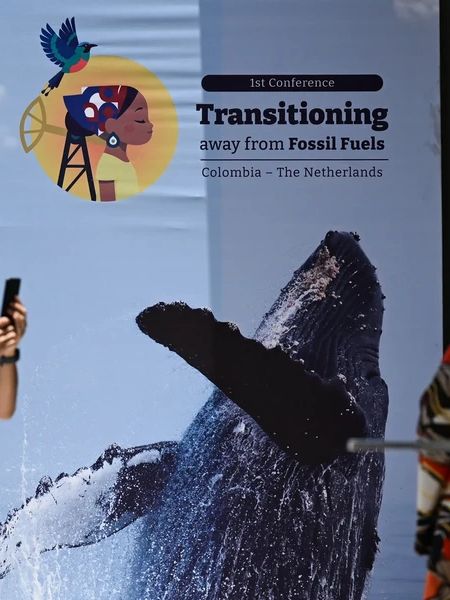 
The First International Conference on Just Transition Away from Fossil Fuels (April 24–29, 2026) in Santa Marta, Colombia, marked a definitive shift in global climate diplomacy. Unlike the high-tension consensus of COP summits, Santa Marta moved from the "if" to the "how."
Key Takeaways:
The Coalition of the Willing: 57 countries (including the EU, Colombia, and the Netherlands) sent a clear signal that fossil fuel dependence is a structural economic risk.
The People’s Declaration: Over 900 organizations launched the People's Declaration for a Rapid, Equitable, and Just Transition, demanding an immediate halt to new extraction and "climate debt" reparations; emphasizing grants over debt-inducing loans.
Systemic Roadmaps: Three thematic workstreams were established to address national phase-out roadmaps, trade policies, and the overhaul of the international financial architecture (including ending the Investor-State Dispute Settlement (ISDS) mechanisms that protect fossil fuel profits).
Looking to 2027: Tuvalu and Ireland have officially been announced as the co-hosts for the second conference in 2027.
|
|
Zero Waste Stories in Africa |

Meet the Speakers:
• 🇪🇹 Eskedar Awgichew E. – Eco-Justice Ethiopia
• 🇺🇬 Patricia Namwanga – End Plastic Pollution, Uganda
• 🇨🇩 Robert Kitumaini – SOPRODE, DRC
African communities across the continent are proving that Zero Waste is a Climate Solution. This new series will share insights and stories directly from the ground. Don't miss it!
🗓️ 26 March 2026
⏰ 10AM GMT
|
|
The African Development Crossroads |

Motion: “This House Believes that planning Africa’s long-term energy future around new fossil fuel investments constitutes a net negative economic and strategic decision.”
Are we fueling the future or the fire?
Ethiopia stands at a pivotal junction. As the global energy landscape shifts, the choice between traditional fossil fuels and a leapfrogged green transition is no longer just an environmental debate—it is a high-stakes economic gamble.
Eco-Justice Ethiopia, in partnership with the Enfluencers and other partner organizations, invites you to an intellectual showdown. We are bringing together leading economists, policy experts, and youth visionaries to dissect the "Cost-Benefit" of fossil fuel infrastructure.
Join us to challenge the status quo, bridge the gap between policy and grassroots justice, and help shape Ethiopia’s stance on the global stage.
📅 Date: February 05, 2026
⏰ Time: 2:00 PM – 5:00 PM (EAT)
📍 Venue: UNDP Regional Office, Fiesta Building (Meskel Flower), Addis Ababa
|
|
National Dialogue Bridging Global Plastic Treaty and Local Action Ahead of Ethiopia’s 2026 Single-Use Plastic Ban |
 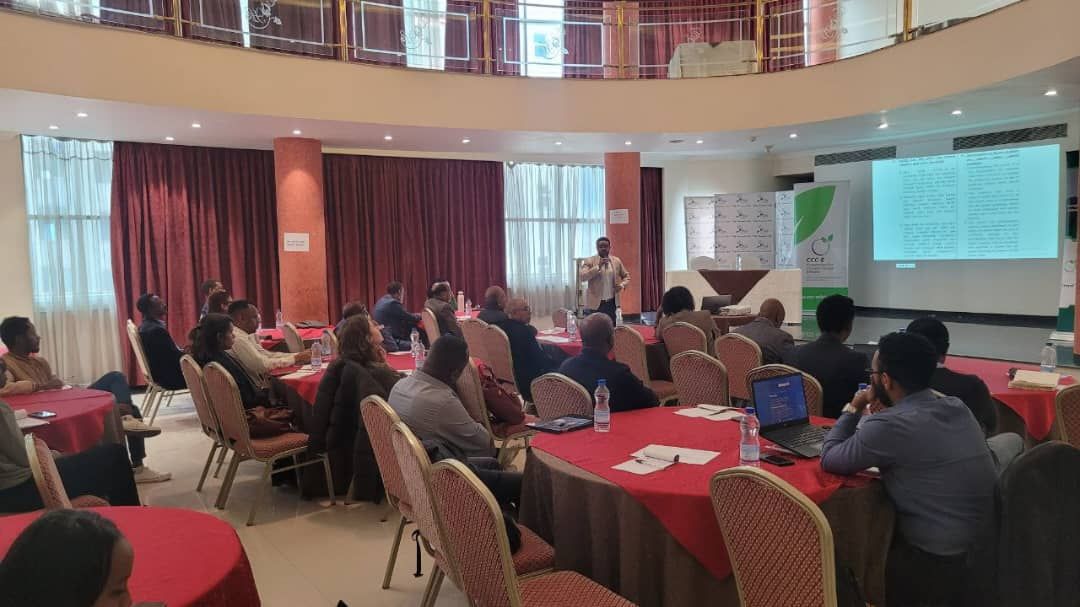
Eco-justice Ethiopia Hosts National Dialogue Bridging Global Plastic Treaty and Local Action Ahead of Ethiopia’s 2026 Single-Use Plastic Ban
Plastic pollution has become a critical environmental and public health challenge in Ethiopia, clogging urban drainage systems, harming livestock, and contaminating water bodies. In response, the Government of Ethiopia ratified the Solid Waste Management and Disposal Proclamation No. 1383/2025 in June 2025. A cornerstone of this law is the full ban on the production, import, and distribution of single-use plastic bags, set to take effect in January 2026.
ADDIS ABABA, 31 December 2025 – Today, the Elilly International Hotel hosted a landmark stakeholder consultation workshop focused on the escalating crisis of plastic pollution and the implementation of Ethiopia's latest regulatory frameworks.
The workshop, titled "A Stakeholder Consultation on Plastic Pollution and Ethiopia’s New Regulatory Landscape," brought together government officials, environmental advocates, and private sector representatives to discuss the newly ratified Solid Waste Management and Disposal Proclamation (No. 1383/2025).
Key Highlights from the Workshop: The event was officially opened by Ato Nigussu Lema, Deputy Director General of the FDRE EPA, who delivered a powerful keynote on the necessity of a unified national front against plastic waste. He was joined by Mekbib Zerihun (CCC-E) and Eskedar Awgichew (Ecojustice Ethiopia) in welcoming the participants.
Technical presentations provided a roadmap for the future:
National Context: Wondwossen Tadesse Debelle (EPA) detailed the specific regulations regarding single-use plastics under the new proclamation.
Global Momentum: Eskedar Awgichew E. presented the timeline of the Intergovernmental Negotiating Committee (INC) process, highlighting the path toward a legally binding global treaty.
Local Solutions: Elshaday Girma Berhanu Girma presented a "Plastic-Free Guide" tailored for the unique challenges and opportunities within Addis Ababa.
Voice from the Community During the plenary discussion, Gash Firew K. Mekonnen from Plogging Ethiopia shared a decade of community-led experience. He drew particular attention to the environmental threat posed by synthetic "Qetema" (plastic grass) now frequently used in cultural ceremonies, urging a return to natural, sustainable alternatives.
Closing Charge In his concluding remarks, Ato Nigussu Lema reminded attendees that the law is only the beginning. The real work lies in raising community awareness and transitioning Ethiopia toward a circular economy where plastic pollution is a thing of the past.
This event was organized by Eco-Justice Ethiopia in collaboration with Consortium for Climate Change Ethiopia (CCC-E)-E and the Environmental Protection Authority, FDRE.
|
|
Environmental School Clubs Students Dialogue Workshop |
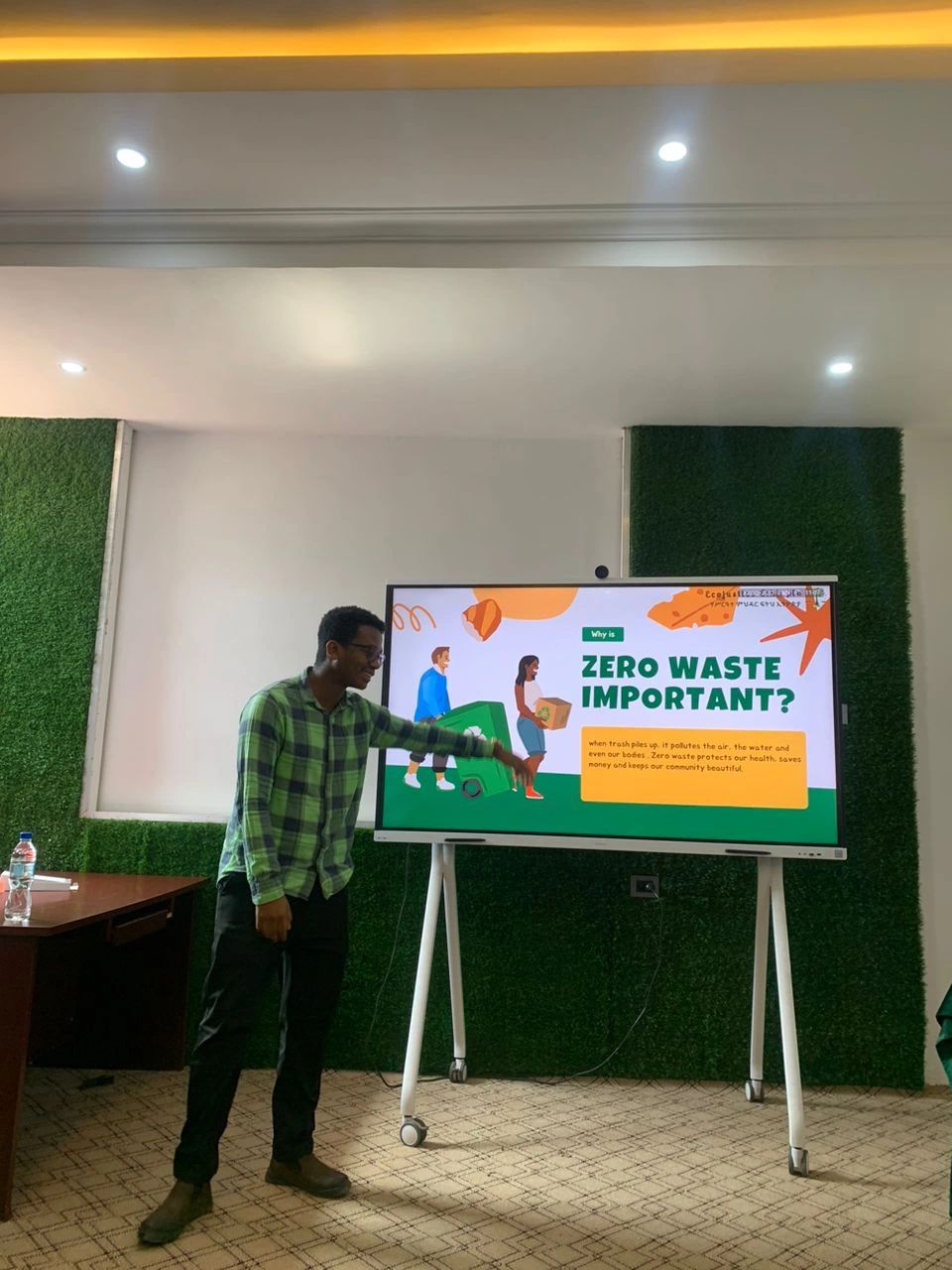 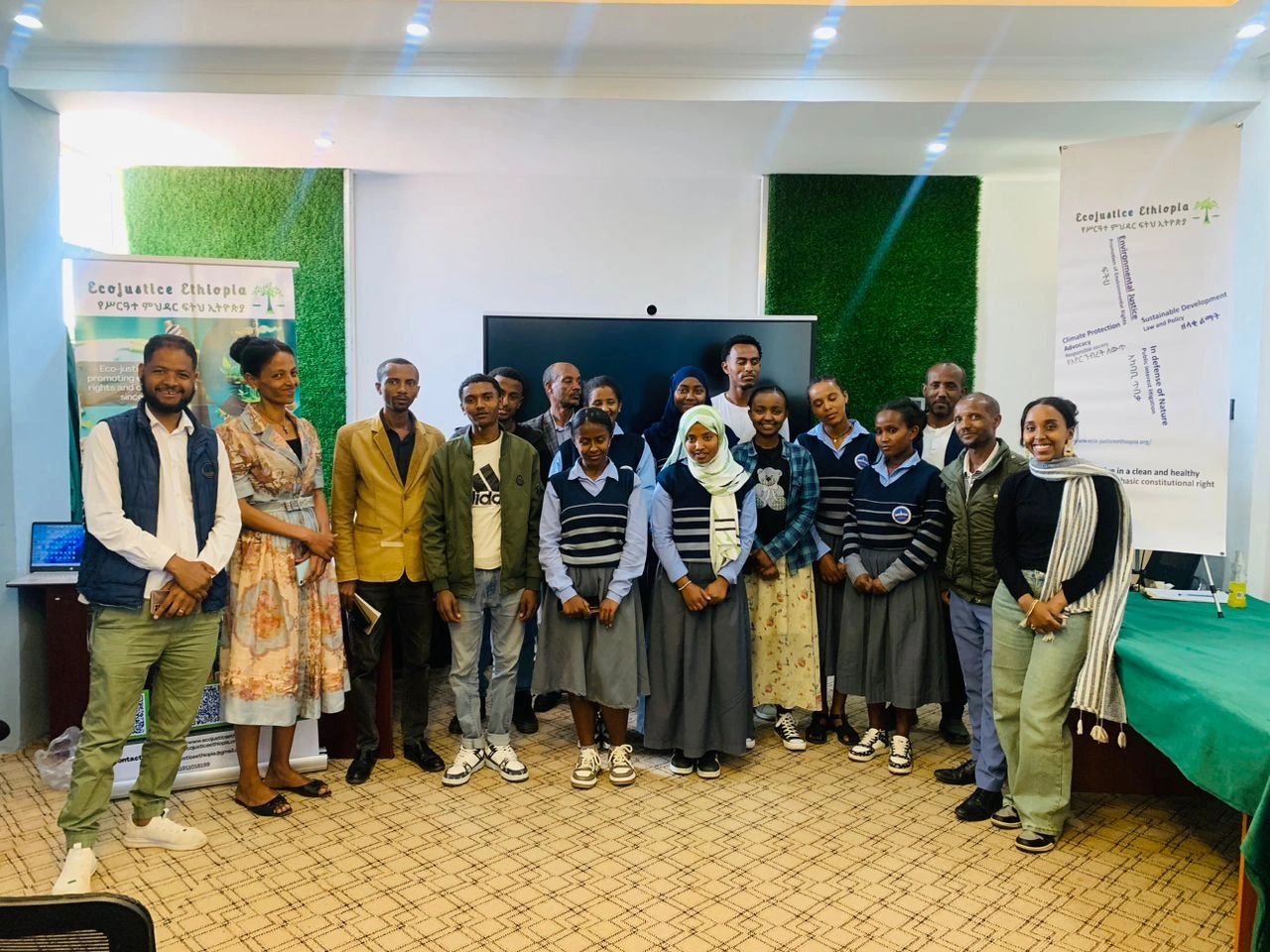
Eco-Justice Ethiopia Hosts Environmental School Clubs Students Dialogue Workshop
Eco-Justice Ethiopia, in collaboration with the Federal Democratic Republic of Ethiopia Environmental Protection Authority , Addis Ababa Environmental Protection Authority, and the Addis Ababa Education Bureau, organized an Environmental School Clubs Students Dialogue Workshop on December 13 , 2025.
The workshop brought together environmental school club students and representatives from relevant government institutions to discuss pollution, climate change, and the role of students in environmental protection.
The program opened with a welcome note by Yewubdar Alemu (FDRE EPA), who outlined the objectives of the workshop and highlighted the importance of engaging students in environmental protection efforts. This was followed by a presentation from Moges Atseke (FDRE EPA), who shared field-based insights on the status, achievements, and challenges of environmental school clubs.
During the technical sessions, Eco-Justice Ethiopia delivered a presentation on climate change, outlining its key drivers and impacts, including the role of fossil fuel use in contributing to greenhouse gas emissions, air pollution, and environmental degradation.A subsequent session introduced the concept of zero waste, outlining its core principles and practical actions that students can implement within their schools and communities.
The workshop featured group discussions and a question-and-answer session, providing students with an opportunity to share experiences from their environmental clubs and propose ideas to strengthen student-led environmental initiatives.
The dialogue workshop reaffirmed the critical role of students and environmental school clubs in raising environmental awareness and promoting responsible environmental practices. Eco-Justice Ethiopia remains committed to supporting youth-centered environmental education and engagement initiatives across the country.
|
|
Workshop on Black Soldier Fly (BSF) Technology |

We are pleased to share with you this information about the upcoming a hands-on workshop on Black Soldier Fly (BSF) technology, taking place on 3 - 4 December 2025 at the BSF site of Bio and Emerging Technology Institute - BETin Institute (BETIn) in Adama, Ethiopia.
This workshop, organized under the BUGS Project, brings together BSF practitioners, farmers, entrepreneurs, NGOs, and waste managers to exchange knowledge, gain practical experience, and explore opportunities for scaling up BSF biowaste conversion in Ethiopia.
Participation is free of charge, with board, lodging, and a modest travel allowance covered.
Dates: 3–4 December 2025
Location: BETIn's BSF site in Adama
Register by: 13 November 2025
Register here:
Google Form link https://lnkd.in/eCy5usEQ
- it is mandatory to register. Only selected participants will receive their confirmation by 19 November.
See the attached flyer for details.
We look forward to welcoming you to Adama for this unique and practical event!
|
|
30th United Nations Climate Change Conference (COP30), Belém, Brazil |
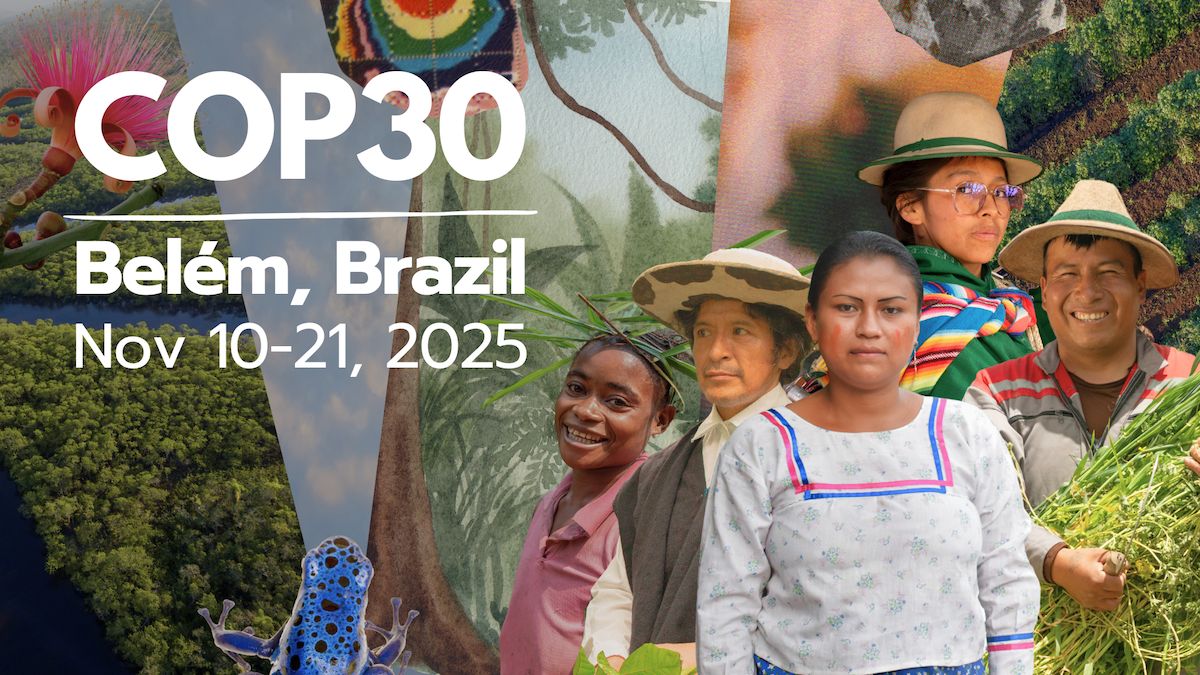 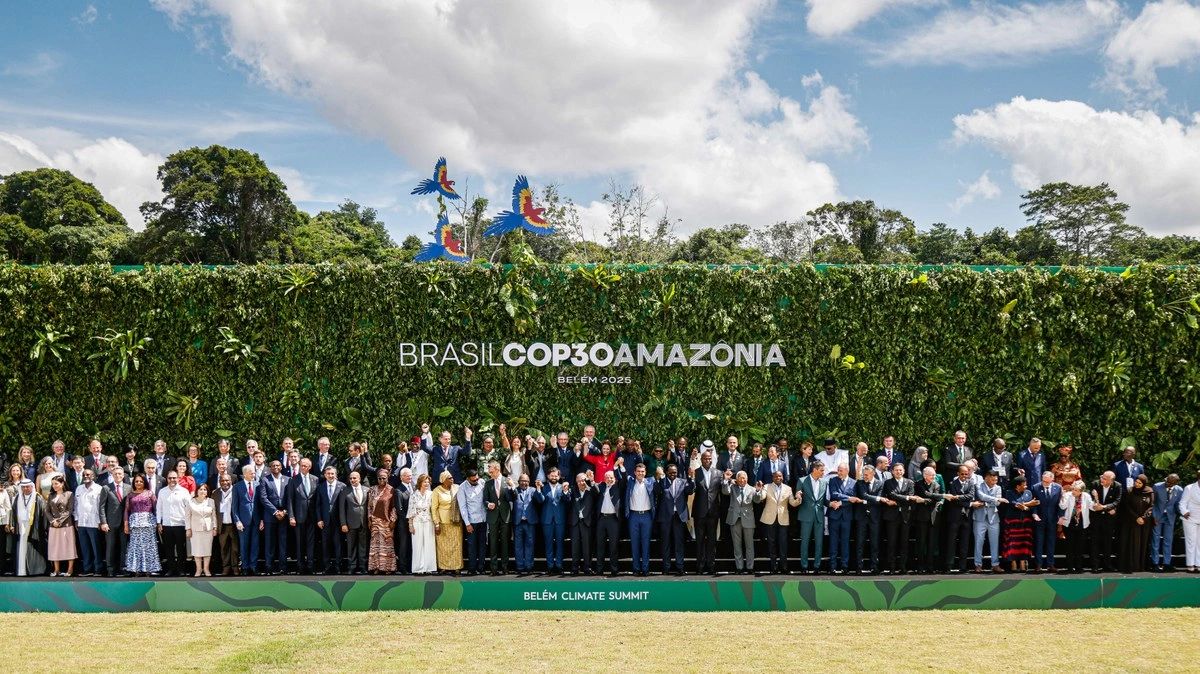
This November, world leaders, negotiators, and civil society actors are gathering in Belém, Brazil for the 30th United Nations Climate Change Conference (COP30), a defining moment for global climate action.
COP30 marks a major checkpoint for the Paris Agreement, as countries are expected to present stronger, more ambitious commitments to limit global warming to 1.5°C. It’s not just another climate summit. It’s a global opportunity to turn promises into real, urgent action.
Just months earlier, Ethiopia hosted the second Africa Climate Summit (ACS2) in Addis Ababa. It was a landmark moment that helped shape Africa’s unified position ahead of COP30. The outcomes and commitments from ACS2 now serve as a powerful foundation for Ethiopia and other African nations to push for fair climate finance, adaptation, and just transition on the global stage.
Why COP30 Matters to Ethiopia
For Ethiopia, COP30 represents more than a global event. It’s a chance to showcase local climate solutions, amplify African voices, and advocate for a just transition that leaves no one behind.
Ethiopia is already feeling the impacts of the climate crisis from prolonged droughts and floods to urban waste challenges and declining agricultural productivity. Yet, the country also holds immense potential for renewable energy, sustainable waste management, and community-driven adaptation.
At COP30, Ethiopia has the opportunity to:
1. Push for equitable climate finance that supports African-led adaptation and green growth.
2. Highlight inclusive climate action, recognizing the vital roles of women, youth, and informal workers in building resilience.
3. Showcase circular economy innovations that link environmental goals with social justice.
4. Strengthen partnerships that scale up sustainable urban and rural climate solutions.
A Call for a Just Transition
As the world moves toward low-carbon economies, justice must be at the center of this transition. The path to sustainability cannot leave behind those at the margins especially women, youth, and waste workers whose daily labor sustains cities like Addis Ababa.
At EcoJustice Ethiopia, we believe that Ethiopia’s climate response must be inclusive and equitable, ensuring that the shift to green development improves both lives and livelihoods.
Looking Ahead to Belém
As we approach COP30, the message from Ethiopia and across Africa is clear:
🌱 Climate action must go hand in hand with social justice.
COP30 offers a chance to reimagine climate responsibility as shared, fair, and empowering for all.
|
|
Youth Leading Local Climate Change Solutions for a Sustainable Future |
 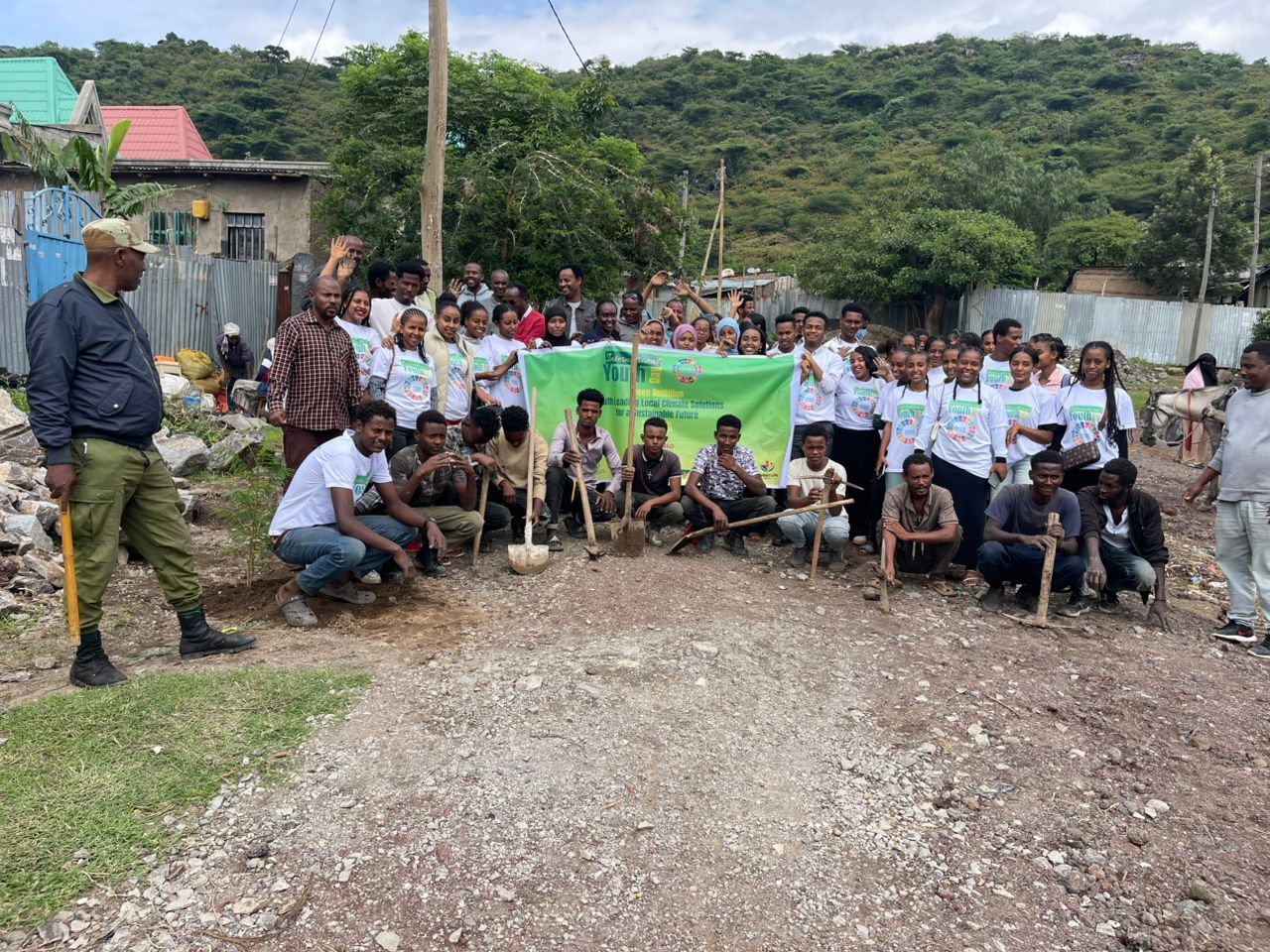
Eco-Justice Ethiopia Celebrated International Youth Day with Action, Dialogue & Youth-Led Solutions in Adama, Oromia.
This year’s International Youth Day in Adama was more than a celebration; it was a movement.
Over 90 young people (ages 15–30) from schools, youth networks, and community groups came together with high-level officials and partners to take climate action and shape Ethiopia’s future.
We kicked off the morning with tree planting at two sites across Adama city and cleaned up plastic waste along the way.
The program continued with keynote remarks from high-level representatives of the Ministry of Planning and Development, Ethiopia; Eco-Justice Ethiopia; UNICEF Ethiopia; U-Report; the Ethiopian Youth Council; and the Adama Region Administration.
UNICEF U-Report then shared how its platform empowers young voices nationwide, before Siham Ahmed from Eco-Justice Ethiopia delivered an eye-opening session on “The Role of Youth in Ethiopia’s Climate Policy – Focus on NDC 3.0”.
In the afternoon, youth rolled up their sleeves for a Youth Dialogue, drafting priorities for Ethiopia’s next climate commitments. Ideas ranged from funding and innovation spaces to skills development and ensuring marginalized voices are heard. Finally, ending the program with the youth drafting their own ideas for the next steps to be taken by the role of the youth.
|